Archetype Interconnection: The Jester
Today, I'm kickstarting a new series, exploring the various archetypes that operate within the human psyche, as well as illuminating the threads of interaction between these mythological forces.

The Jester isn’t here to take life seriously.
The Jester isn’t here to always “do more healing work”.
The Jester isn’t here to remain within the framework of rules.
The Jester doesn’t follow rigid orders.
The Jester isn’t here to live a surface level life.
This Jester lives within all of us. Throughout all of human history, the Jester archetype has appeared with many faces, taking a variety of forms, serving as an underlying thread between various cultures. You’ll see the Jester archetype in the teachings of many great spiritual reformers. The mischievous energy of the Jester appears in many great myths and fables. Now that you’ve learned what the Jester isn’t here to do, what exactly is the Jester here to do?
Before we explore that question, I’d like to share some history about the Jester archetype, as well as the different ways it’s appeared in throughout time. This archetype is quite versatile and complex, as it’s this intricate dance between wisdom and comedy. The Jester remains lighthearted, immersed in playful, present discovery, finding joy in the challenge. The Jester goes by many names, including the Fool, the Clown, or one of my personal favorites, the Trickster. However, each of these names contain different expressions of this central, Jester-like theme, and each culture has it’s own interpretation of this figure, all including the complexity of the many games the Jester plays.
The Jester began as an entertaining act. You can see this in movie figures like Ferris Bueller, Donkey from Shrek, the Weasley twins, or even C3PO. A certain type of energy that seems to have only served to make the guests of wealthy leaders laugh, a way for these rules to show their guests good hospitality. At this time, the Trickster wasn’t taken seriously, although, did they ever want to be? Either way, the Jester evolved to become more respected, as the light of wisdom began to shine through these seemingly simple comedic acts.
Once, I visited a crystal shop in Fort Collins, Colorado, the town I lived in for my last 3 years of high school. I don’t remember what exactly drew me into this shop on this particular day, as it was a quite random occurrence, as many of these scenarios often are. I did have an intention in mind, however. I was looking for a quartz crystal in the shape of the Mer-Ka-Ba, a shape of two interlocking tetrahedrons, or pyramids, which would serve as a visual and physical representation of the light body vehicle that I was learning about in sacred geometry.
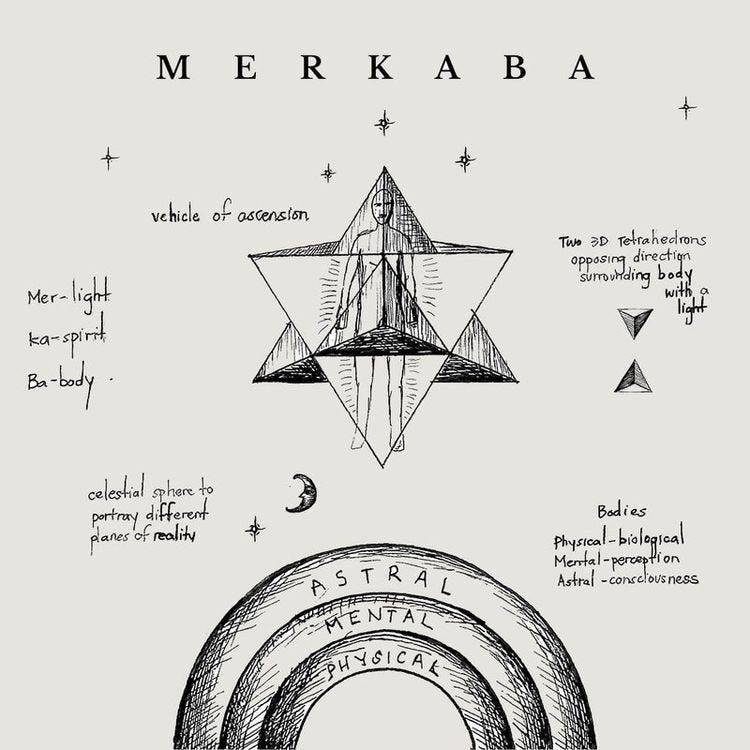
I found the crystal, however, something in my soul knew my work there wasn’t done. There was a psychic in the back of the shop, and so I walked through the beaded doorway and into her small, magic-infused booth.
I sat down, and we had a short 30 minute discussion about different components of where I was currently at on the Path, including some information of my most recent past-life before this current incarnation. She revealed that in a past life, I was a court jester, in the medieval time period. Interestingly enough, I’ve always had a deep connection to the Jester archetype. I was born into this world on April Fool’s Day, the day of the Trickster archetype, and there’s something about this specific date that I believe has spiritual significance. Yes, it’s a wild thought. However, this archetype has given my life a certain tone, this underlying Trickster energy, especially in the ways I interacted socially growing up, always being the class clown, often to my own demise.
I chose this archetype to explore first because, well, it’s my most natural and known embodiment within this present incarnation, and I believe the Jester holds many great lessons, despite it’s foolish appearance. One of my favorite in-person Jester incarnations I’ve met is Patch Adams, the famous clown-doctor, who I had the blessing to wheel down a mountain with a man named Wizard in an off-road wheel chair at the 2022 Rainbow Gathering. If you don’t know about Patch, Robin Williams starred in a movie based on the story of his life. I highly recommend! You can watch it free here.

Now, the Jester is here for a reason, and through my personal experience, research and discovery, I’ve come to realize:
The Jester is here to reside in the “in between” polarities of life, finding peace in the paradox. “Unlike the Jester and the Clown, who are at the bottom of a hierarchical pile and survive only by making the king laugh, the Trickster is free, a paradox, a breaker of boundaries who makes us laugh – and laughter lets the sacred in. In Native spiritualities, there is often a belief that we cannot pray unless we’ve laughed.” -Gloria Steinem. A very explorative quote making distinctions between the names of the Trickster, the Jester, and the Clown present in Native spirituality.
The Jester is here to lighten the mood, lovingly reject corrupted authority, and illuminate hypocrisy. (We can see this in the stories of Jesus as well. He cracked jokes, highlighted the absurdity of the Pharisees, all with love, towards all. Holding the paradox.)
The Jester is here to remind us of and return us to our childlike nature. (in Matthew 8:13, Jesus tells his disciples they must change and become like little children to enter the Kingdom of Heaven)
The Jester is here to have fun and bring life to the party. “The laughing, joking court jester, who is in reality a Shaman, has all the respect of a king, for there has always been an element of danger lurking about beneath the surface of his smile.” -Karl Wiggins
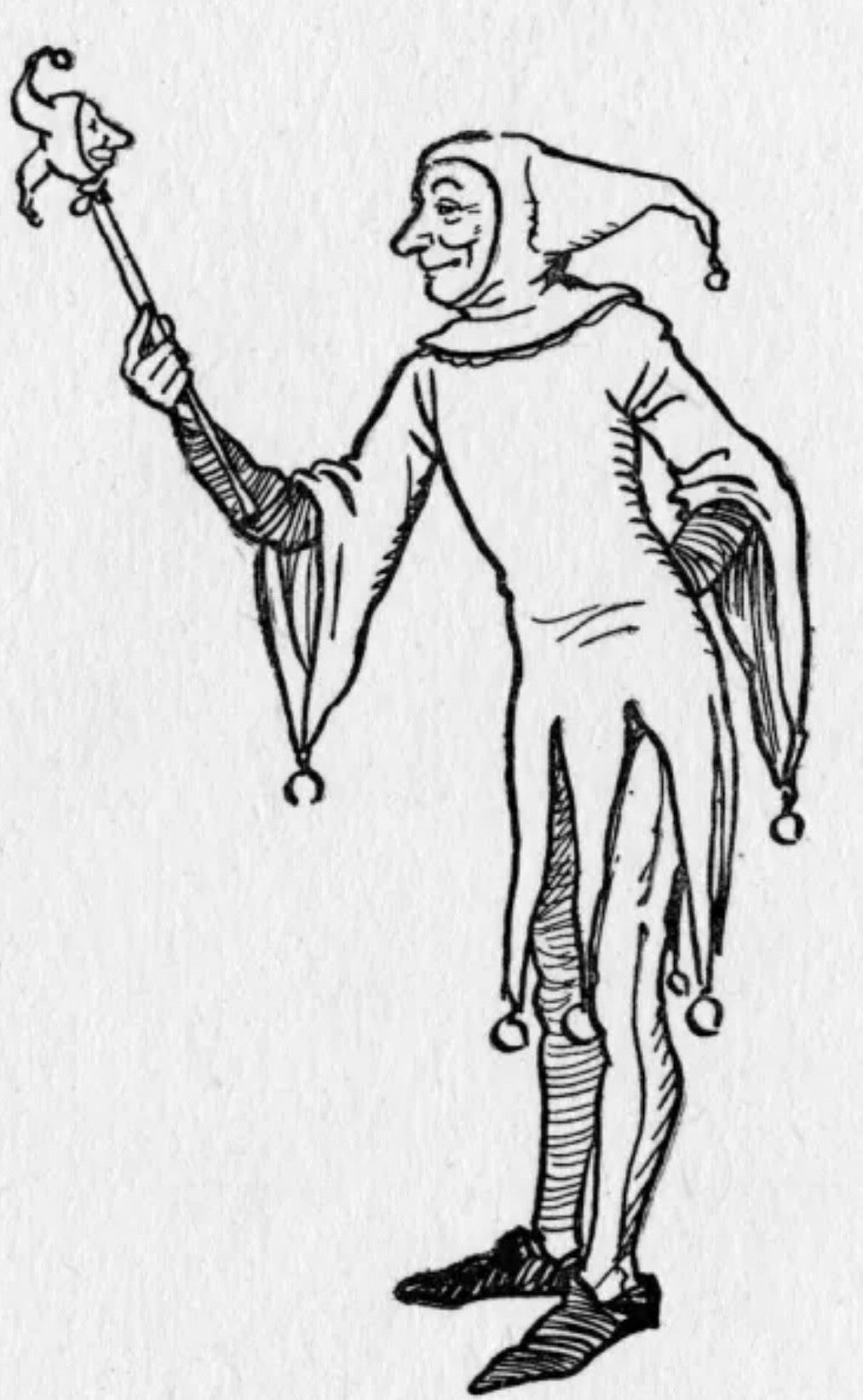
This energy may present itself as a master of wordplay and satire, using humor as a tool to invoke introspection and invite wisdom to the table. The Jester archetype uses laughter as a portal into the soul’s evolution, which can also be seen documented through the Tarot.
Now, although the Tarot holds it’s controversies, and it’s origins are shrouded in mystery…I think the story the Tarot documents is universal to the human experience. I also believe that Tarot, like many tools, can be used in harmony with the Way, or against the Way. Tarot began as a card game in Northern Italy, and has evolved into more than just an attempt to predict the future. Carl Jung, in particular, viewed the Tarot as a potent tool for introspection into these human archetypes.
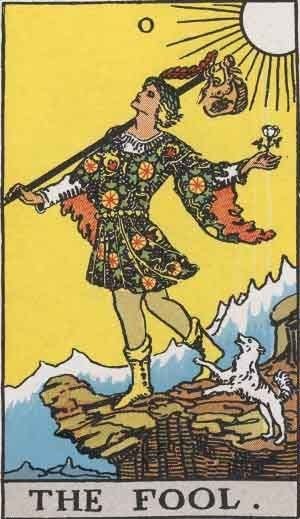
The Journey of the Fool is documented through the Tarot, starting with the first card (numbered as 0) as The Fool. The Fool is naive. This Fool is illustrated as a wandering young boy about to walk off the edge of a cliff, staring up into the sky, with his head in the clouds. He holds a small knapsack on the edge of his stick, symbolizing the small amount he carries at the beginning of his journey. He holds a white rose, symbolizing purity and innocence, and next to him is a small dog, symbolizing loyalty and protection (because boy oh boy does he need it). There’s a whimsical nature to the Fool, always on to the next adventure, having a hard time taking care of practical matters, and utilizing logic in decisions.
Which leads me to the shadows of this general Trickster/Jester/Fool archetype: impulse control. The Trickster can often move without thinking, on impulse, leading to the potential for addiction issues, being overly carefree, emotionally disconnected and guarded. The spontaneity of the Fool can often lead to irresponsibility and recklessness, where this archetype may not take ownership of their actions to confront the realities of adulthood. This can lead to despair and disconnection, using humor as a coping strategy to mask deeper, underlying feelings.
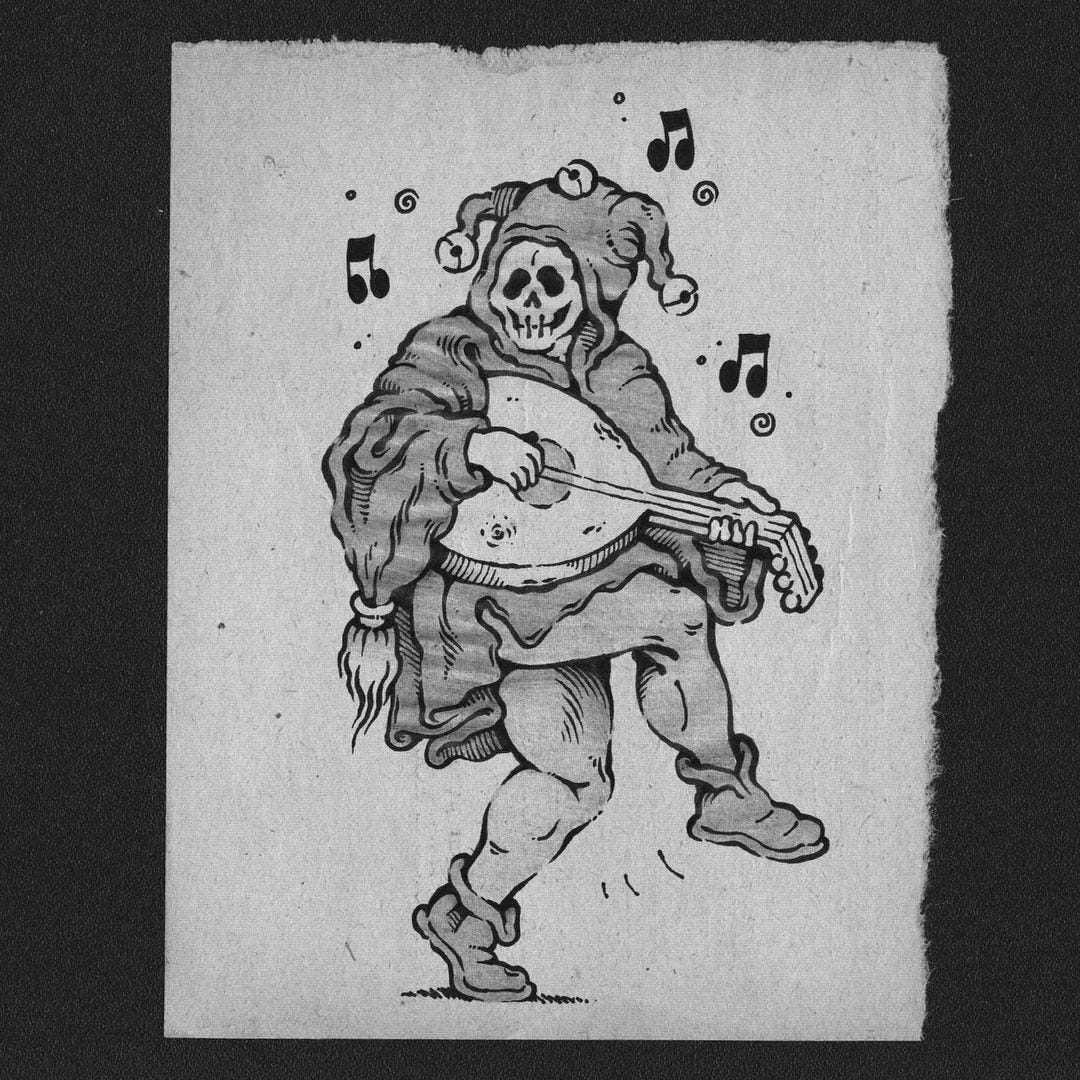
The medicine of this archetype is in it’s ability to play. Beyond the basic, essential benefits of play including stress reduction, creative inspiration, or overall wellness, we can also see how play is a core aspect of the human experience, honoring our current incarnation through regulated enjoyment of God’s Creation.
In the Bhagavad Gita (a Vedic holy text), Lord Krishna (seen in India as an avatar of God in physical form) says in Chapter 6, verses 16-17 “Yoga is not for one who eats too much or too little, who sleeps too much or does not sleep enough. One who is moderate in eating, sleeping, working and recreation banishes all sorrow through yoga.”
In Krishna’s childhood, he was quite the rascal. He valued play highly, often embodying this Trickster-like energy in order to convey deep wisdom and truths to spiritual devotees, helping them along their Path. I see this map over into Jesus as well. He taught firmly, yet lightly. Jokingly, yet seriously. It was fun and playful, while also being invigorating as it’s not easy to live a spiritually devoted life in mainstream society. Being able to handle challenges with greater ease & being more adaptable to different situations comes from our ability to play and embrace the natural, childlike way of viewing the world, while also holding the paradox of adulthood and taking care of responsibilities.
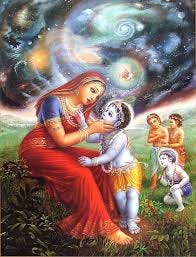
Joy is holy. Seeing the Divine in all things, including our daily tasks and responsibilities, is what sadhana is all about. Sadhana is the daily consecration of our actions, in devotion to Spirit. Play is an inherent part of sadhana, as Krishna says: recreation is essential in the yogic Path. It’s not a luxury you need to earn, however, it won’t be thoroughly enjoyed when other aspects like eating, sleeping, or working are neglected. Play is best enjoyed when we are showing up, taking care of ourselves, and serving others. These are all components of daily life.
I used to try and schedule fun into my life. And while it’s beautiful to create sacred containers for creative chaos, like an Artist Date (inspired from Julia Cameron’s The Artist’s Way, which I highly recommend to any blocked creatives out there, I’ve read it 3 times) or imaginative adventure, we can also create playful micro moments. All it takes is a few moments, or 5 minutes, to activate the play state. We can play with a Tech-Deck for a few minutes, or do some handstands, or play a song and dance to it in the morning. Whatever floats your boat, homeslice. Use more GIFs in your messages with friends, family, and coworkers (if you have a cool boss like me), and screenshot more memes.
The Jester is the playful disruptor. It disrupts the overly serious Anti-Christ patterns in the fabric of reality by choosing joy and love over fear. Slip into synchronicity by embracing spontaneity in conversation, in work, and in house chores. We are here to dance between the worlds of work and play, bringing them together, seeing them as reflected aspects of one another. The Trickster is a force to take control over, and invite more into your life, that way, you can keep it in check. Too much Jester…and you may see important things getting pushed to the side. So, remember that like many internal, psychological patterns we work with, it’s best to take the first move before it takes you. Some of my favorite ways to embrace and integrate the Jester energy is through creative exercise like ecstatic dance, rock climbing, animal flow, and exploring new territories by going on hikes. Take some time to find yours, try new things and see what invokes that playful, childlike spirit within!
I hope you enjoyed this Substack article. These are so fun to make! If you found this valuable, I would deeply appreciate it if you subscribe & share with someone you know who you think would find this information interesting. Peace, love and Jesus. Hare Krishna.